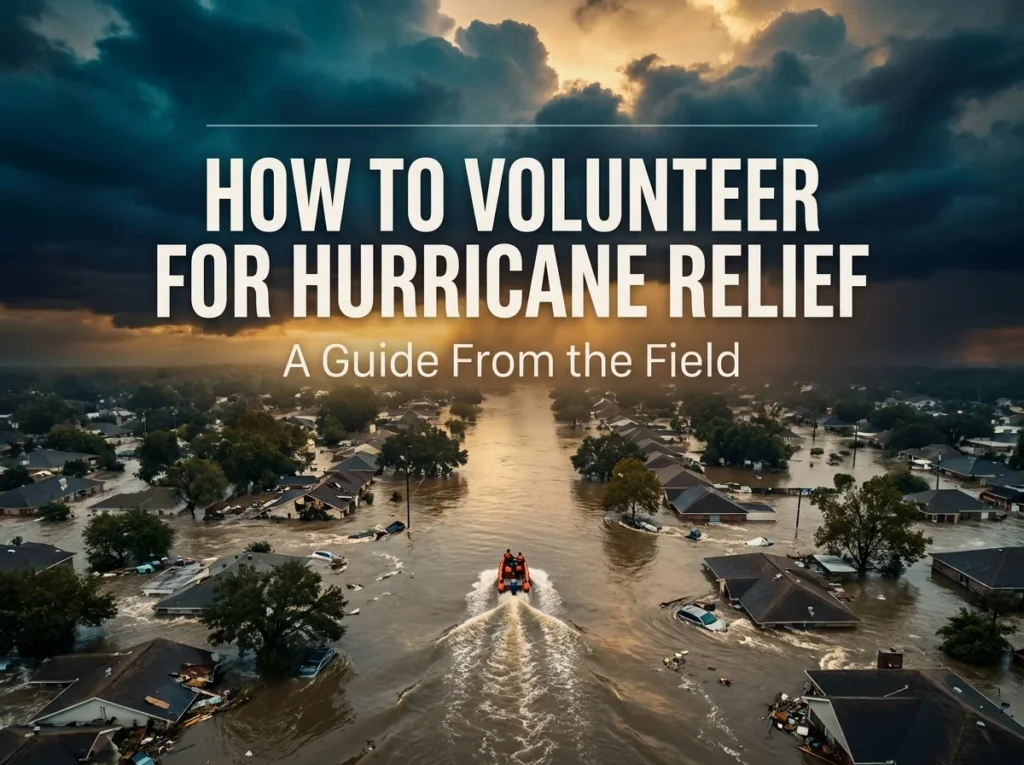

To volunteer for hurricane relief, join an established disaster response organization before hurricane season begins, complete their required training and background checks, and prepare to deploy when the call comes. The process typically takes 30 days or more from application to approval, so the time to sign up is now, not after a storm makes landfall.
That is the short answer. But if you have ever watched hurricane footage and thought “I want to help,” you probably have more questions. What does volunteering actually involve? Do you need special skills or a boat? What happens when you show up? This guide walks through the entire process, from your first application to what a real deployment looks like on the ground.
Why You Should Join an Organization (and Never Self-Deploy)
The single most important rule in disaster volunteering is this: do not show up on your own.
FEMA and the National Voluntary Organizations Active in Disaster (NVOAD) are clear about this. Arriving uninvited to a disaster zone strains local resources like food, water, and shelter. It can block roads that emergency vehicles need. And it puts you in danger without the training, communication systems, or support network to keep you safe.
The effective way to help is through an organized group that coordinates with local authorities, has trained volunteers, and deploys with proper equipment. Organizations like Cajun Navy 2016 work directly alongside local emergency responders and first responders during every deployment, making sure volunteers are in the right place with the right preparation.
Types of Hurricane Relief Organizations
Not all disaster response groups operate the same way. Understanding the differences helps you choose the right fit for your skills and availability.
National Institutional Organizations
Groups like the American Red Cross, Habitat for Humanity, and Team Rubicon are large, well-funded, and operate through formal volunteer programs. The Red Cross focuses on sheltering and comfort. Habitat for Humanity specializes in long-term rebuilding. Team Rubicon draws heavily from military veterans for rapid response and debris operations.
These organizations are excellent, but their size means the process can be slower and more bureaucratic. Training programs are extensive, and deployment may be weeks after a storm hits.
Grassroots Volunteer Networks
Organizations like Cajun Navy 2016 represent a different model. Born during the 2016 Louisiana floods when ordinary residents launched their own boats to rescue trapped neighbors, Cajun Navy 2016 has grown into a nationwide disaster response network with over 50,000 lives rescued and 10,000 volunteers mobilized.
The grassroots model tends to be faster, though it may have fewer resources for long-term sheltering and institutional recovery compared to national organizations. Where grassroots networks shine is in the critical early hours. During Hurricane Ida, Cajun Navy 2016 had boats, an airboat, side-by-side UTVs, chainsaws, and a command unit staged in Denham Springs and Slidell, Louisiana before the storm even made landfall. As founder Jon Bridgers put it: “We are not just going to sit here and wait until we get a call…we’ll be able to go do what we do, help those in need.”
Local Community Programs
If you want to prepare closer to home, Community Emergency Response Team (CERT) programs through Ready.gov teach basic disaster medical operations, light search and rescue, and fire safety. These programs are free and train you to support your own neighborhood during any emergency, not just hurricanes.
How to Sign Up: The Step-by-Step Process
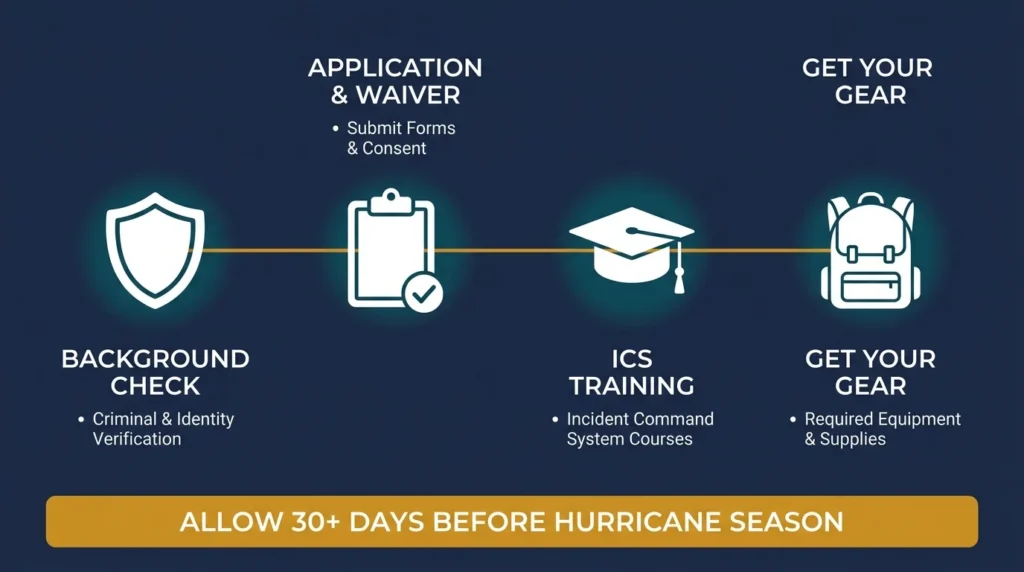
Every legitimate organization requires a vetting process. Here is what a typical process looks like, using Cajun Navy 2016’s volunteer application as an example:
Step 1: Complete a Background Check All volunteers must pass a background check. Cajun Navy 2016 uses True Hire for this process, and there is a nominal fee. The organization is primarily concerned with violent crimes and offenses that affect vulnerable populations, especially children. This step protects the communities you will serve.
Step 2: Submit Your Application and Waiver You will fill out an application and sign a waiver electronically. This covers liability and confirms your understanding of what volunteer work involves.
Step 3: Complete Required Training Cajun Navy 2016 requires four mandatory Incident Command System (ICS) classes. ICS is the standardized framework that emergency responders across the country use to manage disaster operations. It covers chain of command, communication protocols, and how different agencies coordinate during a crisis. Volunteers deployed on water missions are also trained and certified in swift water rescue.
Step 4: Get Your Gear Volunteers cover the cost of their background check and uniform pants. Beyond that, what you need depends on the type of deployment.
Timeline: Expect the vetting and approval process to take 30 days or more. This is why applying before hurricane season (which runs June 1 through November 30) is critical. If you wait until a hurricane is in the forecast, you will not be cleared in time to help.
What Hurricane Relief Volunteers Actually Do
This is the part most websites skip. They tell you to sign up, but they do not explain what happens after. Here is what real hurricane response operations involve.
Search and Rescue
When floodwaters rise, trained volunteers navigate flooded neighborhoods in boats to locate and evacuate stranded residents and their pets. During Tropical Storm Arthur, Cajun Navy 2016 conducted multiple water rescues along the Biloxi River in Gulfport, Mississippi, using Gator-Tail Rescue boats. Operations included evacuating residents from flooded homes and rescuing a youth baseball team (the Pickles from Fort Worth, Texas) who became stranded during a tournament.
In one operation, a kayaker was pinned against an elevated home in dangerous swift current. Cajun Navy 2016 founder Jon Bridgers Sr. and a Gulfport Fire Department firefighter performed the rescue while Vice President Robert Pearson operated a support boat. The kayaker was rescued without injury.
Welfare Checks and Supply Delivery
After the immediate rescue phase, the work shifts to checking on people in hard-to-reach areas. During Hurricane Helene, Cajun Navy 2016 volunteers conducted door-to-door welfare checks in remote mountainous regions of North Carolina, targeting elderly residents and those with limited mobility. They delivered food, water, and medical supplies to communities in Asheville, Black Mountain, and surrounding areas.
The organization also coordinated delivery of tiny homes and camper units to displaced residents who had lost everything.
Debris Clearing and Recovery
Hurricanes leave behind downed trees, destroyed structures, and blocked roads. Volunteers with chainsaws, heavy equipment, and physical endurance work to clear access routes and help communities begin recovery. When tornadoes struck South Mississippi, Cajun Navy 2016 deployed within hours to assist with this kind of recovery work.
Drone Operations
Modern disaster response increasingly relies on technology. Cajun Navy 2016 operates a dedicated drone response program that helps teams survey damage, locate stranded individuals from the air, and assess areas that may be too dangerous to enter on foot or by boat.
Safety: What Every Volunteer Must Know
Hurricane relief work is physically demanding and genuinely dangerous. The CDC warns that many volunteers are not trained in the hazards of floodwater or safe post-flood response practices. Here are the real risks:
Floodwater hazards. Standing water after a hurricane is not clean water. It carries sewage, chemicals, debris, and potentially displaced animals and insects. Never wade through floodwater without proper gear, and never attempt a water rescue without swift water training.
Structural dangers. Damaged buildings can collapse without warning. Flooded foundations weaken structures. Never enter a building that appears unstable.
Electrical hazards. Downed power lines are a constant danger in hurricane zones. Assume every downed line is live.
Heat and exhaustion. Hurricanes hit during warm months. Physical labor in heat and humidity, often without air conditioning or reliable shade, causes real medical emergencies. Hydrate constantly and take breaks.
Carbon monoxide. Generators are everywhere after a hurricane. Running them indoors or in enclosed spaces kills. This is one of the leading causes of post-hurricane deaths.
Emotional toll. You will see destroyed homes, displaced families, and communities in crisis. This work is rewarding but heavy. Organizations that train their volunteers help prepare you for this reality.
This is exactly why training matters and why organizations like Cajun Navy 2016 require FEMA/ICS certifications and swift water rescue training before deploying volunteers on water missions.
What Skills Are Useful (You Do Not Need a Boat)
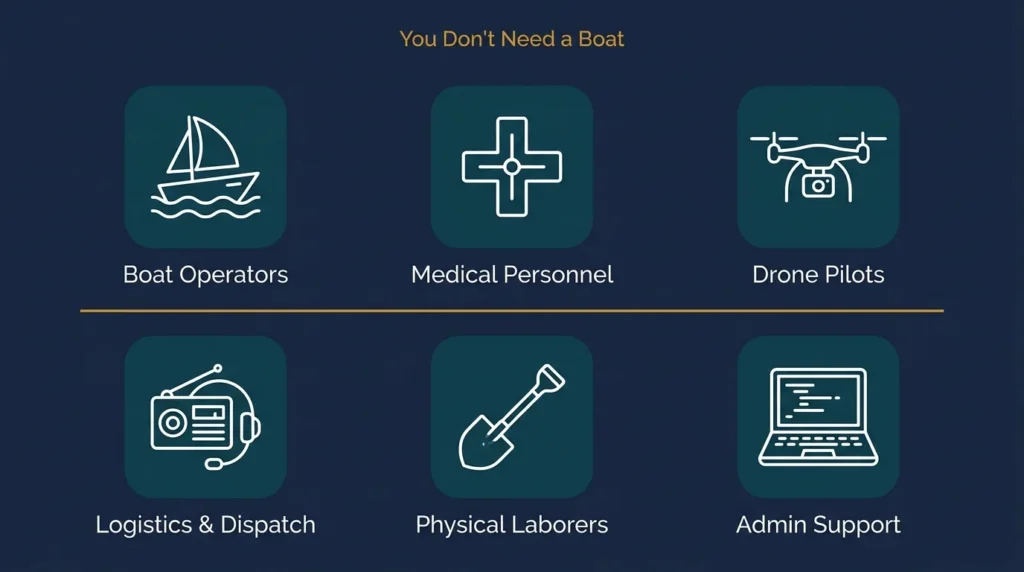
One of the biggest misconceptions about hurricane relief volunteering is that you need to own a boat. You do not. Cajun Navy 2016 welcomes individuals from all walks of life with all skill sets. Here are roles that organizations typically need:
Boat operators. Yes, people with boats and waterway experience are valuable, especially for swift water rescue. But the boats are one part of a much larger operation.
Medical personnel. Nurses, paramedics, EMTs, and doctors are always in demand for treating injuries, heat exhaustion, and other medical needs in the field.
Drone pilots. If you have drone experience and certification, organizations with drone response capabilities need operators who can survey damage and locate people from the air.
Logistics and dispatch. Someone has to coordinate where teams go, manage supply distribution, and communicate between field teams and local authorities. Cajun Navy 2016 has experienced dispatchers who guide teams safely through operations.
Physical laborers. Clearing debris, loading supplies, setting up staging areas, and mucking out flooded homes requires hands and willingness.
Administrative support. Donation management, communication, volunteer coordination, and grant writing keep organizations running. Not every role is in the field.
How to Prepare Before Hurricane Season
Do not wait for a storm to start preparing. Here is a practical timeline:
January through April: Research organizations. Read about their missions, requirements, and the type of work they do. Decide whether you want to join a national organization or a grassroots network like Cajun Navy 2016.
May: Submit your application and start the background check process. Remember, vetting can take 30 or more days.
June (hurricane season starts): Complete your required training. For Cajun Navy 2016, that means four ICS classes. Other organizations have their own training programs.
June through November (active season): Stay ready. Keep a go-bag packed with work boots, weather-appropriate clothing, personal medications, a flashlight, a charged power bank, and basic toiletries. When the call comes, you may need to move within hours.
How to Help if You Cannot Deploy
Not everyone can travel to a disaster zone. That does not mean you cannot make a difference.
Donate money, not stuff. Disaster experts across every major organization agree: cash donations give relief groups the flexibility to buy exactly what is needed locally. Shipping random supplies creates logistical headaches and often results in unusable donations. You can donate directly to Cajun Navy 2016 to support their operations.
Support from home. Some organizations need remote help with social media monitoring, data entry, phone hotline staffing, and donation coordination.
Prepare your own community. Take a CERT class through Ready.gov. Learn basic first aid. Know your local evacuation routes. Help elderly or disabled neighbors create emergency plans. The best disaster response starts with prepared communities.
Frequently Asked Questions
Do I need special training to volunteer for hurricane relief?
Yes. Every legitimate disaster response organization requires some form of training before you can deploy. Cajun Navy 2016 requires four Incident Command System (ICS) classes and certifies water mission volunteers in swift water rescue. The Red Cross, Team Rubicon, and other organizations have their own training programs. Never attempt to respond to a hurricane without proper training.
How much does it cost to volunteer?
Costs vary by organization. With Cajun Navy 2016, volunteers cover the nominal fee for a background check through True Hire and purchase their own uniform pants. Some organizations like All Hands and Hearts provide meals and housing for free during deployments. Travel to the deployment zone is typically your responsibility. You are not paid for volunteer work, but the experience is something money cannot buy.
Can I volunteer if I do not live near the coast?
Absolutely. Hurricanes cause damage hundreds of miles inland. Hurricane Helene devastated mountain communities in North Carolina, far from any coast. Cajun Navy 2016 has deployed to Texas, Mississippi, North Carolina, Washington State, and other locations across the country. Your home location does not limit where you can serve.
Do I need to own a boat?
No. While boat operators are valuable for water rescues, organizations need volunteers for dozens of other roles: supply distribution, welfare checks, debris clearing, drone operations, logistics, medical support, and administrative work. Cajun Navy 2016 explicitly welcomes individuals with all skill sets.
How long does a deployment last?
Deployment length depends on the disaster and your availability. Some volunteers deploy for a few days. Others stay for weeks during major hurricanes. Organizations understand that volunteers have jobs and families, and they work around your availability. The key is being honest about how much time you can give.
Is hurricane relief volunteering dangerous?
It can be. Floodwater carries contamination and debris. Damaged structures are unstable. Downed power lines, extreme heat, and carbon monoxide from generators are all real hazards. This is why trained, organized volunteering is essential. Organizations provide safety briefings, proper equipment, and experienced team leaders. Going alone is where the danger multiplies.
When should I sign up?
Now. Do not wait for a hurricane to be in the forecast. The vetting process with organizations like Cajun Navy 2016 takes 30 days or more. Hurricane season runs from June 1 through November 30. Apply well before season starts so you are cleared and trained when the call comes. Start your application here.