
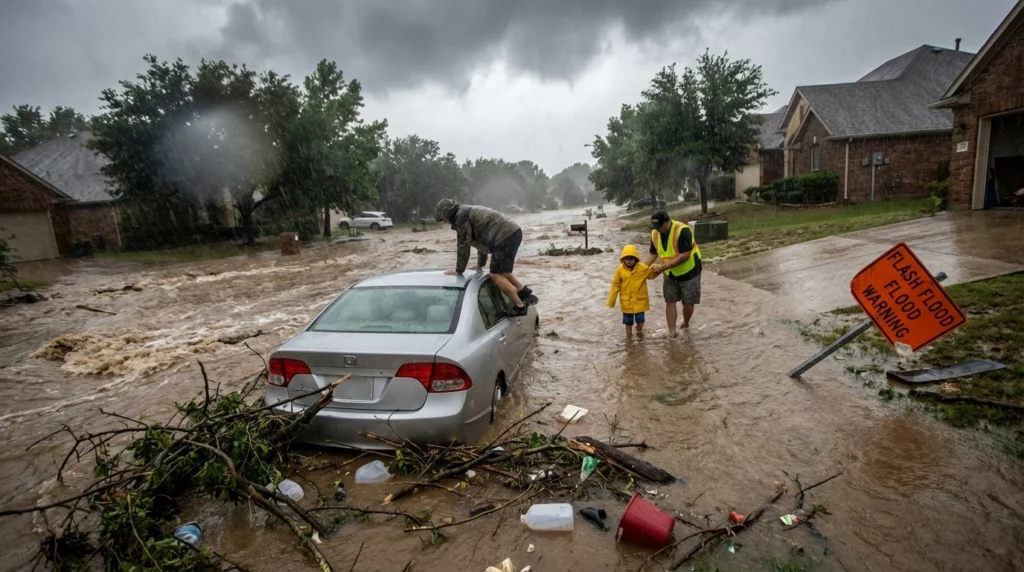

When a flash flood strikes, the first thing you must do is get to higher ground and out of the water. In Louisiana (and everywhere), moving up to a hill or a tall building is your best immediate protection. It’s not an exaggeration: just 6 inches of fast-moving water can knock an adult off their feet, and 12 inches can sweep your car away. That’s why safety experts scream: “Turn Around, Don’t Drown!”. In practice, I always tell friends and family: never enter flooded streets or fields even if it looks shallow. If water is rising near you, head indoors to the highest floor or climb to high ground outside. If you’re in a car when flooding hits, abandon it immediately for higher ground or a rooftop. These quick actions moving up and avoiding the flow are the single most important ways to survive a flash flood.
Immediately After a Flash Flood Warning
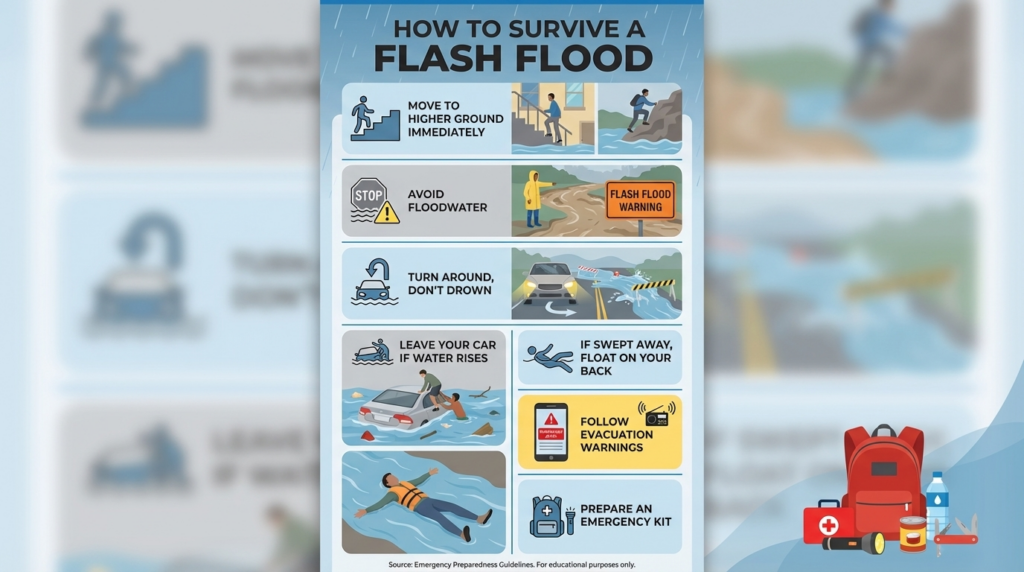
- Move to high ground immediately. Flash floods can rise fast. If you’re indoors, go to the upper floors (or roof); if outside, get to the nearest hill or sturdy overpass. Stay away from low spots like basements, drainage ditches, canyons or stream beds where water can surge.
- Avoid floodwaters entirely. Don’t walk, swim or drive through them. Floodwater can hide debris, sinkholes, or toxic chemicals. The CDC warns that standing water can carry disease and pollutants, and NOAA notes it often contains “sewage, oil, sharp objects and debris”. By staying out of the water, you avoid drowning and infection.
- Evacuate if told. When officials issue an evacuation order or flash flood warning, heed it at once. As soon as you’re alerted, pack up and leave (or move everyone upstairs) – don’t wait. Prepare a “go bag” in advance so you can leave quickly with essentials (meds, phone, small valuables).
- Stay tuned to weather updates. Keep a battery-powered radio or phone app ready to follow local forecasts. Even if skies clear, remember: floodwaters can arrive long after rain ends. If heavy rain or a flood watch is in effect, review evacuation routes and be ready to move.
Driving and Floodwaters: “Turn Around, Don’t Drown”
Official signs like the one above warn you of danger: don’t drive into flooded roads. The floodwater may look harmless, but it can be deadly. In fact, over half of flood-related drownings happen in vehicles. Always obey roadblocks and do not try to cross.
- Never drive through standing water. It only takes 6 inches of rushing water to knock an adult off their feet or cause car loss of control. A mere 12 inches can push a small car, and 18–24 inches can sweep away SUVs and trucks. Even if the water looks shallow, you can’t see potholes or collapse beneath. So, following the golden rule, always turn around when faced with flooded roads.
- If your car stalls, get out fast. If water starts swirling around your wheels, abandon the vehicle. Experts advise: unbuckle, break a window if needed, and climb onto the roof. Tools like a seatbelt cutter/window breaker in your glove box can save precious seconds. Staying inside is far more dangerous as the car can float and drown you. In one study, emergency responders found many flood deaths occurred when drivers stayed in stalled vehicles. Climb out quickly, head to the roof, and wait for help.
- Heed the signs. Warning barriers on a flooded road are there for a reason – “the road may have collapsed under that water”. You cannot judge the depth or current by sight.
If You’re Swept Away in Water
If you do find yourself unexpectedly in moving water, keep calm and use these survival tactics:
- Float like a starfish. Lie on your back with your feet pointing downstream. This way, your feet hit any obstacle first and protect your head. Spread your arms and legs out (like a starfish) to keep your body afloat. As long as you stay face-up and head-back, you maximize breathing space.
- Swim slowly and look for an exit. Use your arms in a gentle backstroke to steer. Identify a safe spot (like a bank or banked road edge) and aim for it. Don’t panic and thrash – swimming calmly gives you more control. In fast water, you may just drift a short distance each time you stroke. Once you find a spot where the water slows or there’s an outcrop, pull yourself out.
- Watch for debris. Floodwaters carry heavy logs, sheet metal, appliances and other hazards. These can injure or pin you. If you’re pushed under or trapped, protect your head and face with your arms and try to free yourself slowly. The Northeastern experts note that after drowning, blunt trauma from debris is the next biggest killer in flash floods. If you can, move with the current until you are clear of danger.
- Call for help once safe. If you reach a safe bank or a rooftop, use a phone or signal (flashlight, whistle, bright cloth) to draw attention. Remember, seconds count: dial 911 as soon as you’re out of the immediate danger (for example, once you’ve climbed to your car’s roof or the top of a building).
Even sturdy homes aren’t safe when flash floods hit. In this photo, first-floor rooms are underwater. Never stay in a basement or ground floor if your house floods. Move everyone to an upper level or the roof (if safe to do so) – it’s easier for rescuers to see and reach you. Don’t try to walk through floodwater inside your home; floodwater can rise rapidly and trap you in low rooms. If water is coming in fast and you have only a minute, grab whatever you need, leave everything else, and climb up high. Once safe on upper ground or high floor, wait for the water to recede or for help to arrive.
Plan Ahead and Follow Warnings
Pre-planning and paying attention can save your life. Keep in mind:
- Stay informed. Sign up for local weather alerts and monitor forecasts during stormy weather. A weather app or NOAA radio can warn you of flash flood watches and warnings. If heavy rain is predicted, know the terrain – have a plan to move to safety if needed.
- Know your escape routes. Before storms hit, identify the nearest high-ground locations from your home or office. Pick two or three evacuation paths, avoiding low-lying roads and bridges. In a flash flood, bridges can collapse or wash away without warning. Always have a backup route in case your primary way is blocked.
- Prepare an emergency kit. Although flash floods may come with little notice, keep a small kit ready: flashlight, whistle, portable charger, water bottle and medications. This will help you survive if you need to hunker down or evacuate in a hurry.
- Evacuate promptly when ordered. If local authorities say “Go now,” don’t debate it. Moving early (especially at night) can prevent a panic scramble when water starts rising. Remember, floodwaters and mud can strand you quickly. In the worst Louisiana floods, too many people stayed behind and had to be rescued by boat.
Above all, do not underestimate water’s power. It’s both swift and unforgiving. If you’re ever unsure about crossing water or staying put, err on the side of caution. By acting quickly moving to high ground, avoiding the flow, and remembering Turn Around, Don’t Drown, you greatly increase your chances of surviving a flash flood. Stay safe out there.