
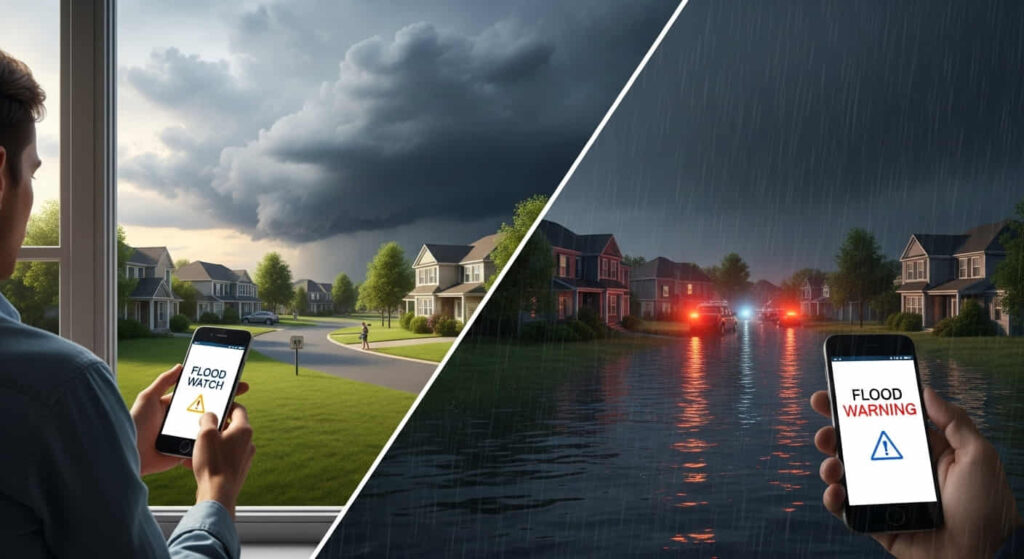

Think of a Flood Watch as a weather heads-up and a Flood Warning as a go-now alert. In plain terms: a Flood Watch means flooding is possible in your area – it’s time to get ready. A Flood Warning means flooding is imminent or already happening – it’s time to act to stay safe. In fact, the U.S. National Weather Service even labels them “Be Prepared” (watch) versus “Take Action” (warning).
Key Differences at a Glance
- Flood Watch – Be Prepared: Conditions are right for flooding (e.g. heavy rain or snowmelt), but it may not happen. Flooding is possible, so you should start taking precautions now.
- Flood Warning – Take Action: Flooding is imminent or occurring nearby. This is like an emergency alarm – you must move to safety immediately.
When a Flood Watch Is Issued
When you hear a flood watch, treat it as a strong caution. The National Weather Service actually tells you to “Be Prepared”. In practice, that means you should:
- Monitor official sources. Keep an eye (or ear) on local weather updates and alerts. Check the NWS or local news frequently in case the watch becomes a warning.
- Prepare an emergency kit. Gather essentials now: bottled water, non-perishable food, flashlights, batteries, a first-aid kit, and any medications. Having a disaster kit ready in advance is crucial.
- Make an evacuation plan. Know in advance where higher ground or a safe shelter is. Plan how you’d get there. If you need to leave, have important documents and valuables ready to grab quickly.
- Take care of basics. Charge your phone and portable battery, and fill your car’s gas tank. If there’s time, move pets or outdoor furniture to safety. Think ahead so you can act fast if conditions worsen.
By doing these things before flooding starts, you’ll be ready to respond without panic if the situation escalates. In short, treat a Flood Watch like a yellow traffic light: slow down, pay attention, and prepare to stop or turn if needed.
When a Flood Warning Is Issued
A Flood Warning means the danger is now: flooding is about to happen or already happening in your area. You should not wait – take immediate action. Never underestimate floodwaters. For example, look at the photo below:
- Move to higher ground now. Go uphill or indoors on an upper floor immediately – especially if you live in a flood-prone area.
- Evacuate if told to do so. Always follow official orders. If local authorities say evacuate, don’t hesitate – leave right away.
- Avoid floodwaters. Never drive or walk through flooded areas. Just a few inches of water can be powerful. Remember “Turn Around, Don’t Drown.”
- Stay informed and prepared. Keep listening to local radio or weather apps for updates. Have your emergency kit and phone ready in case you have to leave at a moment’s notice.
- Secure your home if possible. If you have time before leaving, unplug electronics and turn off utilities (electricity, gas, water) to reduce hazards.
A Flood Warning is the red alert of flooding – act fast and smart. By moving to safety and following these steps, you protect yourself and your loved ones from the flood.
Stay Safe and Informed
In summary, Flood Watch means get ready and Flood Warning means go to safety now. Never ignore these alerts – they are based on official forecasts. Always have a plan, listen to trusted weather sources, and know what steps to take. If you prepare during a watch, you’ll be able to act quickly when a warning comes. Stay safe!