
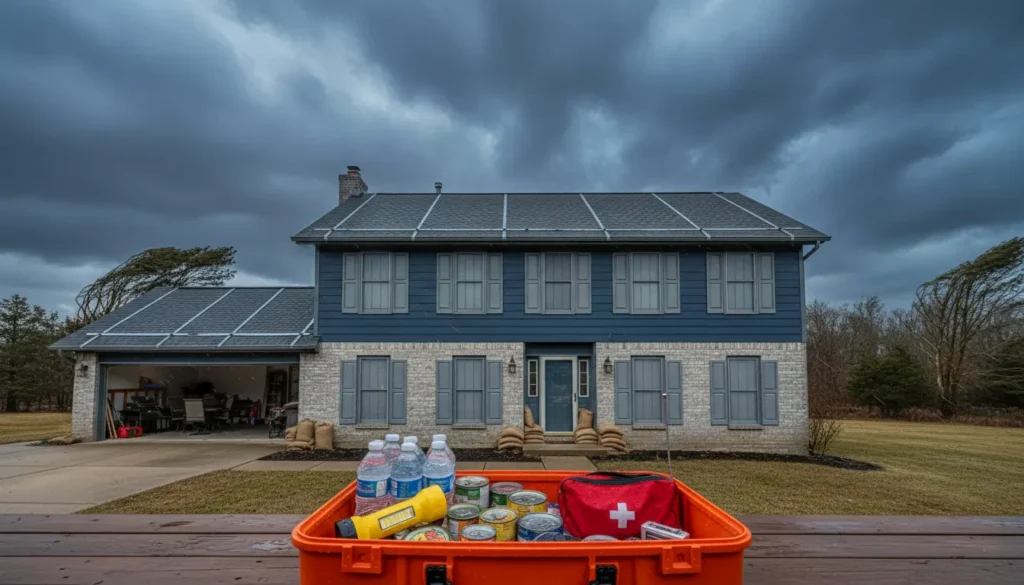

Getting ready for a natural disaster means taking simple, proactive steps now so you and your family stay safe later. In a nutshell, you should build an emergency kit, make a family safety plan, and fortify your home against storms, floods, fires, or quakes. For example, experts say to gather at least a two-week supply of water and non-perishable food per person, sketch out evacuation routes and meeting spots, and reinforce weak spots in your house (like windows or the roof) before disaster strikes.
Create a Home Safety Plan and Kit
Start by assembling a home emergency kit and plan that anyone in your family can follow. Include at least one gallon of water per person per day and two weeks’ worth of non-perishable food. Don’t forget essentials like flashlights, batteries, a battery-powered or hand-crank radio, a first-aid kit, and any prescription medicines. Keep important documents – passports, insurance papers, birth certificates – in a waterproof, portable container. Also, establish a communication plan: decide on an out-of-area contact person and a family “rally point” where everyone meets if you must evacuate.
- Emergency Supplies: Water (1 gal/person/day), food (canned or dry, easy-prep), flashlight, extra batteries, radio (NOAA/weather band), and a multi-tool.
- Health & Safety: First-aid kit, masks (for smoke or ash), prescription medications (7–14 days’ supply), pet supplies, diapers, glasses, etc.
- Important Documents: Copies of ID cards, passports, insurance papers, deeds – store in a zip-lock or waterproof folder.
- Evacuation Plan: Map out multiple escape routes from your home. Pick a safe meeting spot (like a neighbor’s house) and practice “Get Out” drills. Make sure every family member knows how to text or call the emergency contact (in case cell service is spotty).
Secure the Structure of Your Home
Next, fortify your house itself against damage. Clean out gutters and downspouts so heavy rain or melting snow can’t pool and cause leaks. Inspect the roof and re‑secure any loose shingles or tiles. If you live in a hurricane or high-wind area, consider installing hurricane straps or clips that tie the roof securely to the walls.
- Windows and Doors: Protect glass by installing storm shutters or pre-cut plywood panels. In a pinch, even taping an “X” pattern with duct tape on glass can help prevent shattering. For exterior doors, use long, strong screws on hinges and deadbolts (at least 3 inches) to anchor them firmly. Check that garage doors are wind-rated (some can withstand over 130 mph) or reinforce them, since a blown-out garage door can cause roof failure.
- Landscaping: Trim back dead or overhanging tree branches that could fall on your roof or vehicles in high winds. Move lightweight plants, potted trees, and yard furniture under cover or tie them down – anything loose can become a flying projectile in a storm.
- Seal Openings: Caulk gaps around windows and doors to keep out rain and wind (and to improve insulation). Storms and floods can push water through tiny cracks, so fresh caulking helps prevent leaks.
Exterior Protection Measures
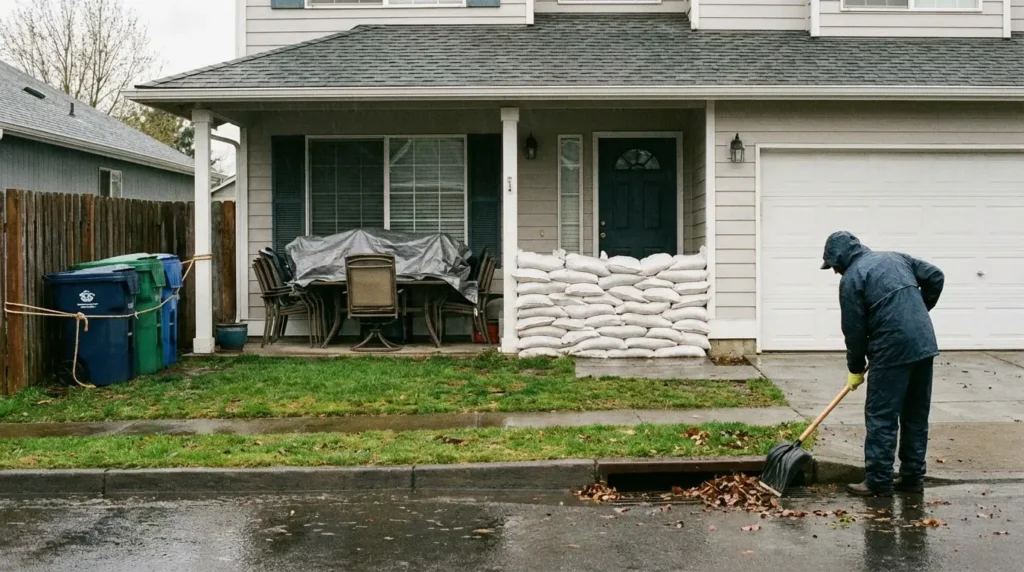
Don’t forget the yard and outside areas. Store or anchor outdoor furniture, grills, ladders, plant pots, kids’ toys – basically anything that could blow away. Move firewood and gas cans away from the house. In flood-prone places, clear storm drains and ditches so water can flow freely. If heavy rain or a hurricane threatens, have sandbags ready to divert water, and make sure your sump pump (if you have one) is tested and working.
- Loose Items: Bring in or tie down patio chairs, trash cans, bicycles, and decorations.
- Flood Prep: Clear leaves and debris from gutters and street drains. Place sandbags or temporary barriers at doors if water is rising. Consider using flexible flood skirts or sealants around basement windows.
- Ground Water: Check that your foundation drains and sump pump are clear. Add a battery backup pump or generator if power loss is possible.
Utility and Insurance Checklist
Keep survival tools and information handy. Know how to turn off your electricity, gas, and water: label each shutoff valve or breaker, and keep a wrench or pliers nearby. In case of leaks or damage, knowing these can prevent fires or flooding.
- Safety Gear: Install smoke and carbon-monoxide detectors on each floor, and test them every 6 months. Have fire extinguishers in the kitchen and garage. Keep flashlights in reachable places.
- Insurance Review: Read your policies now. Standard home insurance usually covers common perils like wind, hail, fire or lightning, but it does not cover floods or earthquakes by default. If you’re in a flood zone or quake zone, you may need separate flood or earthquake insurance. Make sure you have enough coverage on the house and rebuild costs. Take photos or video inventory of your home and belongings for claims.
- Emergency Funds: Keep a small cache of cash (ATM won’t work if power is out) and copies of credit card numbers off-site.
Always stay aware of weather alerts on local radio or a NOAA Weather Radio. In a fast-onset emergency, follow officials’ advice without delay (especially evacuation orders).
Disaster-Specific Preparations
If you live in a high-risk area, tailor your prep to that hazard:
- Wildfires: Create a 30–100 foot “defensible space” around your home by clearing dry leaves, pine needles, brush, or weeds. Studies show up to 80% of homes lost to wildfires could have been saved if surrounding vegetation was cleared. Stack wood piles at least 30 feet from structures, and use fire-resistant landscaping (succulents, gravel). Keep hoses long enough to reach all sides of the house.
- Earthquakes: Secure heavy furniture and appliances. Use straps or brackets to bolt bookcases, TVs, and water heaters to wall studs. Install latches on cabinet doors to keep dishes inside. Move beds away from windows. (According to earthquake safety guides, anchoring each tall or heavy item is Step 1 in quake-proofing your home.)
- Volcanoes/Ash: If you’re near a volcano, stock up on N95 or P100 dust masks – they filter fine ash from the air. Keep roll of duct tape and plastic sheeting to seal door and window gaps (this prevents ash from blowing in). Plan to stay indoors during ashfall and keep filtering your indoor air (avoid using AC units that draw in outside air).
- Hurricanes/Tornados: Identify the most interior, windowless room (or storm cellar) for shelter during extreme winds. If you have a safe room or basement, reinforce it with plywood or storm panels. Always evacuate low-lying areas or weak structures if ordered.
By covering the basics – an emergency kit, a family plan, and a fortified home – you greatly increase your family’s safety and peace of mind. Start early (hurricane season or fire season warnings are not the time to begin!), and review your preparations each year. Stay safe, stay informed, and know that taking these steps now will help protect your loved ones when disaster hits.