
Yes, droughts are usually counted as natural disasters. A drought is an unusually long dry spell with below-normal rainfall. Over time this “sucking” of moisture from the land causes big problems for people, crops, and animals. Because droughts build up slowly and affect wide areas, experts call them slow-onset or “creeping” disasters. In fact, organizations like WHO describe drought as “a slow-onset disaster characterized by lack of precipitation” that leads to water shortages and serious harm to health and food supplies. In short: a drought is a natural climate event that becomes a disaster when it causes starvation, economic loss, or other severe damage.
What Is a Drought?
A drought happens when a region gets much less rain (or snow) than normal for many weeks, months, or even years. During a drought, soil moisture falls, rivers and lakes shrink, and groundwater is drawn down. In other words, the water we normally depend on for drinking and growing food isn’t being replenished fast enough.
Different types of drought focus on various parts of this process:
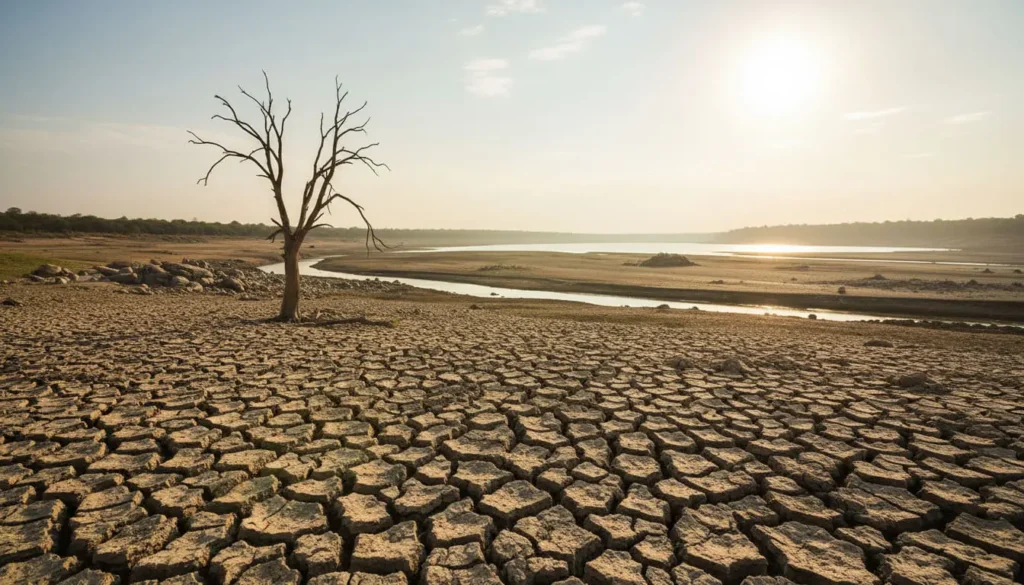
- Meteorological drought: Too little rainfall over a long period. This causes the “dry, cracked earth” we picture with drought (the photo below is a good example).
- Hydrological drought: Water levels drop in rivers, lakes, and reservoirs. Streams that once flowed start to dry up.
- Agricultural drought: Soil moisture is too low for crops. Plants and pastures start to fail, hurting farmers and livestock.
Each of these effects can happen together or separately, but all come down to one thing: too little water. When even a normal farming season fails because there’s not enough rain, the drought turns into a crisis.
Impacts of Drought on People and Nature
Droughts threaten communities in many ways. Without enough rain, lives and livelihoods dry up. Some of the hardest effects are:
- Crop failure and hunger. No rain means no irrigation. Farmers’ fields turn brown. In recent years, they estimate 55 million people worldwide suffer the effects of drought every year.
- Water shortages. Well water and city water supplies run low. People have trouble getting clean drinking water. Simple tasks like cooking, bathing, or washing become difficult. A lack of water also means poor sanitation – leading to hygiene problems and disease.
- Health crises. WHO warns that drought increases disease risks. When there’s too little water, malnutrition and thirst weaken people. Contaminated water and crowded living conditions can lead to outbreaks of cholera, diarrhea, and other illnesses. Mental health also suffers, as stress and displacement take a toll.
- Migration and conflict. Struggling families may be forced to leave home in search of water and food. Unfortunately, this can cause social tension or conflict over scarce resources.
- Environmental damage. In nature, plants and wildlife suffer. Rivers that fish depend on dry up. Forests become tinderboxes. Even after rain returns, ecosystems take time to recover.
Why Do Droughts Happen? (Natural and Human Causes)
Droughts result from natural climate patterns – but human activity is changing how often and how badly they occur. Naturally, high-pressure weather systems or global patterns like El Niño can block rain. For example, the American Southwest is now in a “megadrought” that scientists say is unprecedented in 1,200 years. Rising temperatures from climate change make this worse: warmer air evaporates soil moisture faster and steals water from already dry regions.
Human actions also play a role. Cutting down forests (deforestation) removes a natural source of moisture in the air and dries out the soil. Pumping too much groundwater or diverting rivers for farming can drain water that would otherwise help in dry times. In practice, this means a heatwave is still “natural,” but a disastrous famine is partly caused by lack of preparation or bad policies.
In Summary:
Droughts start with nature (no rain, high heat) but climate change and land-use decisions are making them more frequent and severe. This intersection of natural cycles and human influence means we must address both sides – cutting emissions and managing water better – to lessen future disasters.