

The worst category of hurricane is Category 5 – the highest rating on the Saffir-Simpson Hurricane Wind Scale. In simple terms, Category 5 storms have sustained winds of at least 157 miles per hour (252 km/h). At this level, a hurricane will cause catastrophic destruction: most homes can lose their roofs and walls, trees and power poles are swept away, and entire neighborhoods may be unlivable for weeks or longer.
Meteorologists consider hurricanes of Category 3 or higher as “major” storms because of their incredible power. But even among majors, Cat 5 stands apart as the most dangerous. Official agencies like the National Hurricane Center warn that a Category 5 hurricane will destroy a high percentage of buildings and leave areas without power or shelter for months. In short, Category 5 is the strongest and most destructive category on the scale.
The Saffir-Simpson Hurricane Scale
Meteorologists sort hurricanes into Categories 1 through 5 based on wind speed. This system (called the Saffir-Simpson scale) is designed to estimate the damage potential. (It doesn’t directly include storm surge or rain.) On this scale, higher numbers mean stronger winds and worse damage. For example, a Category 1 storm has winds of 74–95 mph, while a Category 5 starts at 157 mph or more.
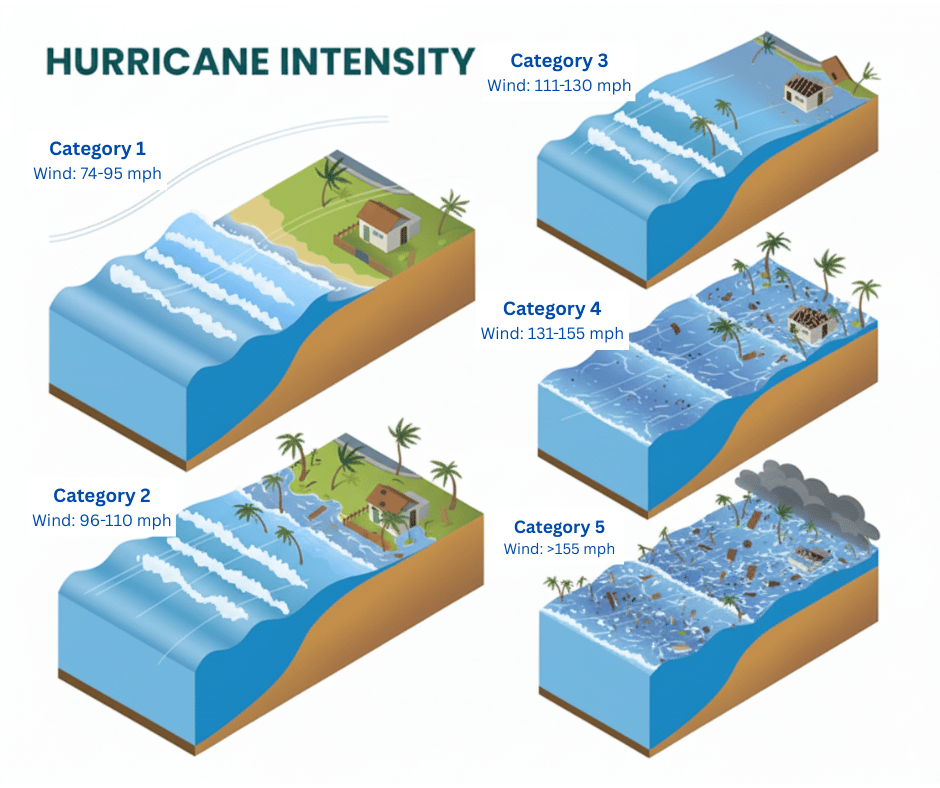
Each category corresponds to a range of wind speeds and expected damage. For instance:
- Category 1: 74–95 mph winds – can cause some roof and tree damage.
- Category 2: 96–110 mph winds – causes more damage to roofs, siding, and large trees.
- Category 3: 111–129 mph winds – major hurricane; can destroy mobile homes, uproot many trees, and cut off utilities for weeks.
- Category 4: 130–156 mph winds – major hurricane; causes catastrophic damage like severe structural failure and long-term power outages.
- Category 5: 157+ mph winds – major hurricane; causes catastrophic damage with most homes destroyed and areas uninhabitable.
As the categories climb, even the strongest well-built houses can be torn apart. Category 3 and higher storms are all life-threatening, but Cat 5 is by far the worst. (In the western Pacific, storms with 150+ mph winds are often called super typhoons, which is essentially the same intensity as a Category 5 hurricane.)
Category 5 Hurricanes: The Most Powerful Storms
A Category 5 hurricane has sustained winds exceeding 157 mph. These winds are so extreme that few storms ever reach this level. Even in the Atlantic basin, only a few dozen hurricanes on record have become Category 5. For example, Hurricane Andrew (1992) in Florida was Cat 5, as was the Labor Day Hurricane of 1935 in the Florida Keys. When a storm reaches Cat 5, forecasters take it very seriously.
Because these hurricanes have such violent winds, they totally overwhelm homes and buildings. NOAA explains that Cat 5 winds will destroy a high percentage of framed houses – roofs and walls come off entirely. Debris becomes deadly projectiles. Power lines and trees are flattened, isolating neighborhoods for a long time. In fact, official descriptions of Cat 5 damage match a scene of total devastation: “a high percentage of framed homes will be destroyed, with total roof failure and wall collapse. Fallen trees and power poles will isolate residential areas…Most of the area will be uninhabitable for weeks or months.”
Because Category 5 storms are the strongest, they can lift and carry huge amounts of water too, causing massive storm surges. This can flood coastal areas many feet deep. In short, Category 5 is the maximum – the worst hurricane category.
Devastating Effects of Category 5 Storms
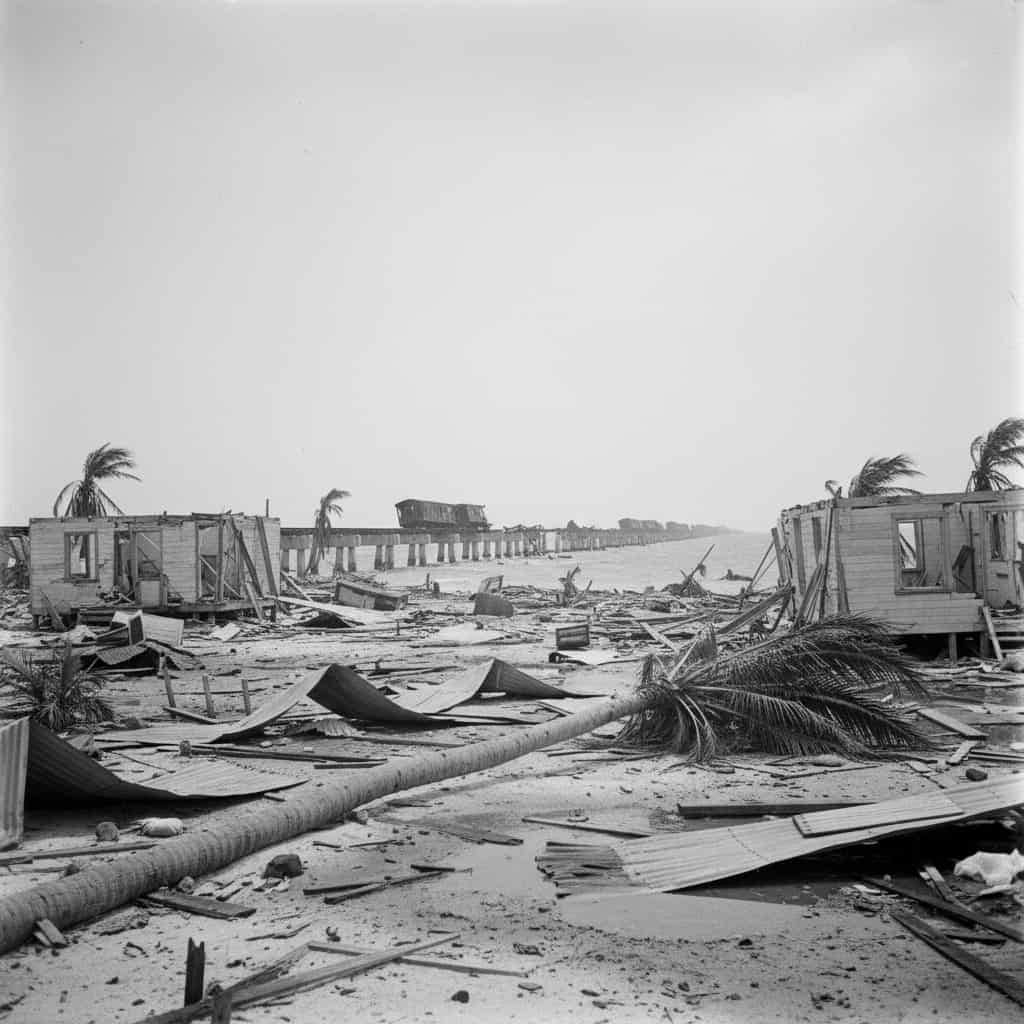
Take the 1935 Labor Day Hurricane (Category 5 with ~185 mph winds). It literally wiped out entire islands in the Keys. A 40-mile swath of the Keys was leveled: nearly every building was destroyed by wind and a huge 15–20 ft surge. NOAA’s reports say most man-made structures in the Keys were destroyed by that storm’s Cat 5 winds. This photo shows mangled houses and palms strewn in the sand – a typical outcome when a Cat 5 hurricane strikes. In general, after a Category 5 storm, vast areas can be uninhabitable for weeks or months as communities recover.
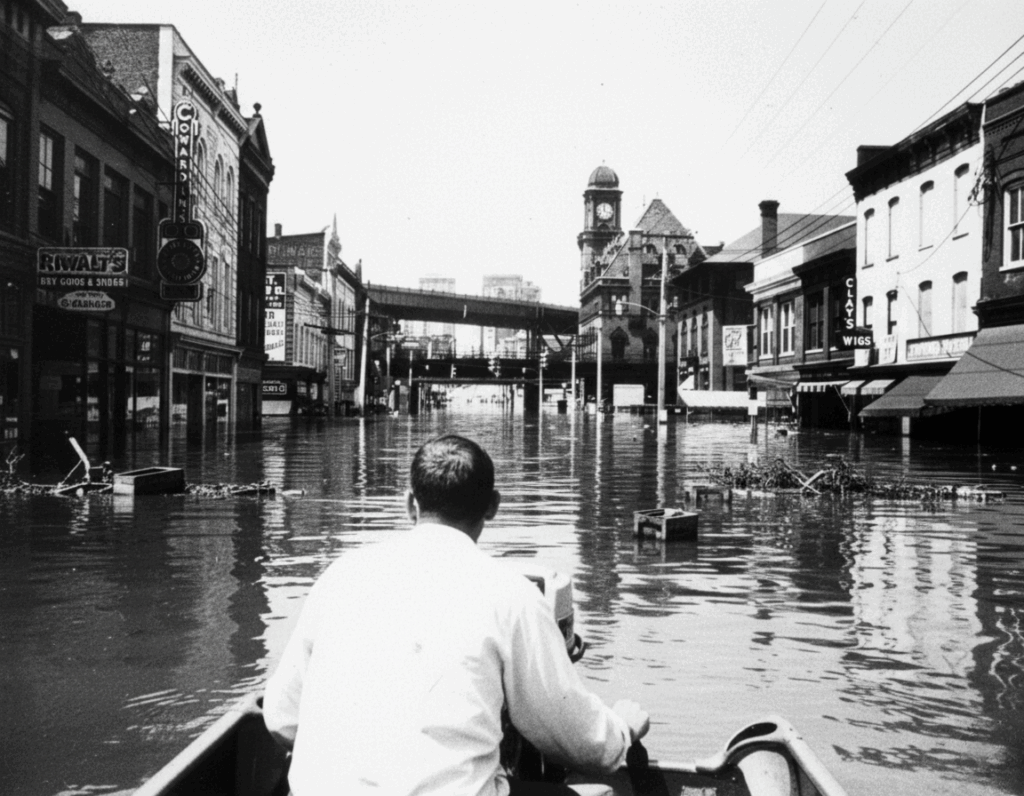
Even hundreds of miles inland, the effects are deadly. Hurricane Camille (1969) was Cat 5 on the Gulf Coast, and days later caused catastrophic floods in Virginia (pictured above). NOAA reminds us that Category 5 storms bring “catastrophic damage” and leave areas without power or safe homes for weeks or months. The power of 160+ mph winds means even a well-built school or hospital could collapse, and flying debris makes it too dangerous to stay outside during the storm. In short, a Category 5 hurricane is an all-out catastrophe.
Summary
In summary, Category 5 is the worst possible hurricane category because it has the fastest winds and most severe damage. By definition, Cat 5 storms pack winds over 157 mph, strong enough to destroy nearly everything in their path. Thanks to NOAA and meteorologists, we know exactly what that means: a Category 5 hurricane will cause “catastrophic damage” to buildings and infrastructure. These storms are rare, but when one is headed your way, it’s critical to take evacuations and warnings very seriously.