
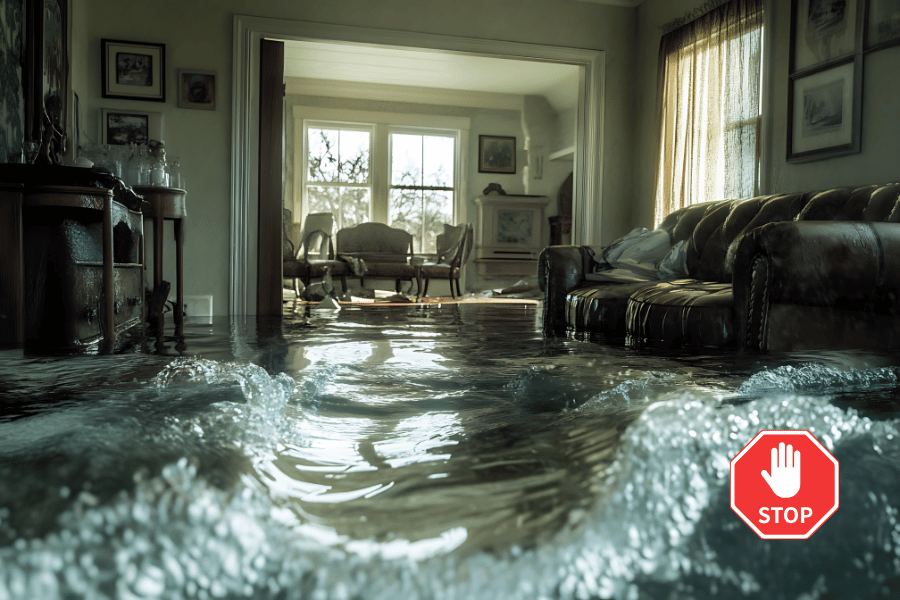

Keeping floodwater out starts with directing rain and runoff away from your home and sealing any gaps where water could sneak in. First, make sure gutters and downspouts are clean so rainwater flows freely and is carried at least several feet from the foundation. Check that the ground around your home slopes downward away from the foundation, so puddles drain outward instead of pooling next to the wall. Inside, repair cracks in your basement walls or slab with cement or waterproof sealant, and apply a waterproof membrane on the exterior foundation to plug leaks. When heavy rains threaten, use barriers (like sandbags or water-filled flood panels) at doors and vents. Finally, have a working sump pump (with a battery backup) and a flood alarm in the basement – these will pump out any water that does get in. Together, these measures create multiple layers of defense that greatly reduce the chance of floodwater entering your house.
Exterior Drainage: Keep Water Moving Away
- Clear Gutters & Drains: Remove leaves and debris so rain can’t overflow or back up into the roofline. Also clear any yard or basement drains.
- Extend Downspouts: Attach extensions or splash blocks so downspouts discharge at least 6–10 feet from the foundation (or into a drainage ditch).
- Slope the Ground Away: Make sure soil around the house is pitched downward. A gentle 5%–10% grade sloping away from the foundation will carry water away naturally.
- Check Window Wells: If you have basement windows below ground, ensure their wells have drains. Keep those drains unclogged so water can escape. Consider adding sturdy window-well covers (e.g. polycarbonate or metal covers) to keep leaves and debris out of the well and stop overflow.
Seal Foundation & Walls
- Seal Cracks Promptly: Inspect basement walls and floors for cracks or gaps. Seal any openings with hydraulic cement, epoxy, or caulk so water can’t seep through.
- Apply Waterproof Coating: Coat exterior foundation walls (up to about 3 feet above ground) with a waterproof sealant or membrane. This extra barrier makes concrete walls “watertight” and stops slow seepage.
- Use Flood Vents (if applicable): If you live in a flood-prone zone, consider flood vents for crawlspaces (these let water in and out freely to prevent pressure buildup and wall collapse). (Check FEMA or local guidelines.)
- Protect Doors and Openings: Fit basements and garages with tight-fitting, rubberized flood shields or doors. In an emergency, you can install removable flood panels or sandbags at these entry points.
Interior Pumps & Protections
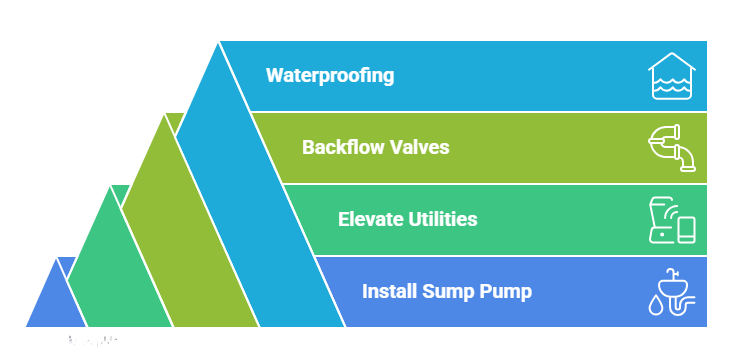
- Sump Pump (with Backup): Install a good-quality sump pump in your basement or lowest floor. When floodwater comes in, it pumps it out. To prepare for power outages, add a battery-operated backup pump or a water-powered pump. A simple water-leak alarm near the sump will alert you the moment water rises.
- Elevate Utilities: Raise the furnace, water heater, electrical panel and other appliances off the floor. Even a few inches on a concrete block can keep them above a shallow flood. The National Flood Insurance Program advises that elevating these “machinery and appliances above the first floor” reduces damage and risk.
- Backflow (Backwater) Valves: Have a licensed plumber install a sewer backflow valve on your main drain line. This one-way valve lets wastewater exit but stops sewer or storm drains from backing up into your basement. It’s especially useful if your area’s sewers can overflow.
- Waterproofing Membranes: For an extra step, interior drain-tile systems or waterproof membranes (rubberized liners) inside the basement wall can intercept and carry water into the sump before it ever reaches the living space. (These are more involved fixes if water intrusion is chronic.)
Flood Emergency Prep
- Deploy Barriers: When a flood warning comes, act fast. Stack sandbags or deploy temporary flood barriers at doorways, garage openings, and low windows to block rushing water. Even a simple plywood or plastic shield held in place can help.
- Move Valuables Up: Elevate important belongings. On flooding days, move furniture, electronics and irreplaceable items to higher floors or shelves. Store documents and keepsakes in waterproof bins.
- Know Shut-offs: Learn where the main water valve and circuit breakers are, so you can safely turn them off if needed. If water is approaching electrical outlets or appliances, cut the power at the panel (if it’s safe) to avoid electrocution. Also, shut off propane or gas valves if ordered to evacuate.
- Stay Informed: Monitor weather reports and emergency alerts. If evacuation is advised, leave early and turn off utilities as directed. Safety is your first priority.
Long-Term Planning
- Know Your Flood Risk: Check FEMA flood maps or local planning resources to see if you live in a floodplain. Even if not, any home can flood in a big storm. Being aware means you can take appropriate measures.
- Flood Insurance: Standard homeowner’s policies do not cover flooding. If you’re in a high-risk area (or even moderate risk), consider flood insurance through the NFIP or a private provider. It’s the best way to protect your finances against a costly flood.
- Maintain Your Defenses: Twice a year (or after big storms), recheck your preparations: clean gutters, test the sump pump, inspect sealants, and replace any worn-out flood barriers. Small preventive fixes now can avoid huge headaches later.
Preventing floodwater from entering your house is about smart preparation. By keeping water away with good drainage, sealing off entry points, and having pumps and barriers ready, you build a strong defense. This multi-pronged approach – combining exterior grading and gutter care with interior pumps and valves – is exactly what experts recommend to keep your home dry. Stay proactive, and your home will weather even heavy rains much more safely.